


Introduction to Japan’s Luxury Shopping Paradise
Have you ever wondered why savvy luxury shoppers plan entire trips to Japan just to purchase designer handbags and watches?
It’s not just about the sushi and cherry blossoms—Japan has become the world’s go-to destination for scoring genuine luxury goods at surprisingly lower prices.
In 2026, this trend continues stronger than ever, making Tokyo, Osaka, and other Japanese cities veritable goldmines for fashion enthusiasts and bargain hunters alike.
The allure of Japan’s luxury market isn’t just hype or wishful thinking.
Real savings of 15-30% compared to prices in Europe, the United States, or other Asian markets are entirely possible.
When you factor in tax refunds, favorable exchange rates, and Japan’s competitive retail environment, the numbers speak for themselves. But what exactly makes Japan such a special place for luxury shopping, and how can you maximize your savings?
Let’s dive deep into the economics, practicalities, and insider secrets of luxury shopping in Japan.
The Currency Advantage: How the Yen Makes Luxury Affordable
Understanding Currency Exchange Rates in 2026
Currency fluctuations play a massive role in determining how affordable luxury goods are across different countries. Think of exchange rates as a constantly shifting scale that can tip purchasing power dramatically in your favor—or against it.
For international shoppers visiting Japan in 2026, the currency situation remains favorable, though not quite at the historic lows seen in previous years.
The Japanese yen has experienced significant volatility over the past few years, and while it has strengthened somewhat from its 2022-2023 lows, it still offers considerable value compared to the US dollar, Euro, and other major currencies.
When luxury brands price their products globally, they don’t constantly adjust for every currency fluctuation.
This creates windows of opportunity where your home currency simply goes further in Japan than it would elsewhere.
The Weak Yen Phenomenon
Between 2022 and 2024, the yen reached multi-decade lows against the dollar, creating what some called a “golden age” for luxury shopping in Japan. While the yen has recovered partially by 2026, it remains relatively accessible for foreign shoppers.
What does this mean in practical terms?
A Louis Vuitton bag priced at ¥300,000 might cost you around $2,000 USD, whereas the same bag in New York could be priced at $2,500 or more—before sales tax.
The beauty of this currency advantage is that it stacks with other savings mechanisms. You’re not just getting a good exchange rate; you’re combining it with tax refunds and lower base prices to create compound savings that can reach 25-30% on certain items.
It’s like getting a designer handbag on sale without waiting for actual sales, which luxury brands rarely offer on their most popular items.
Tax-Free Shopping Benefits for International Visitors
How Japan’s Tax Refund System Works
Japan’s consumption tax currently sits at 10%, and here’s the exciting part: as a foreign visitor, you can get this entire amount refunded on qualifying purchases.
This isn’t a complicated bureaucratic nightmare like in some European countries—Japan has streamlined the process to encourage tourism and shopping.
When you make a purchase at a participating store (and virtually all luxury boutiques participate), you simply present your passport. The store staff will process your tax exemption on the spot or provide documentation for airport refund counters.
The minimum purchase requirement is typically ¥5,000 (about $35 USD), which you’ll easily exceed with any luxury item. Some stores even deduct the tax immediately at checkout, making the process seamless.
Maximizing Your Tax-Free Savings
Here’s where strategy comes into play.
Not all stores handle tax refunds the same way. Department stores like Isetan, Mitsukoshi, and Takashimaya have dedicated tax refund counters where you can process multiple purchases from different brands all at once.
This is more convenient than visiting individual brand boutiques and handling paperwork separately.
Pro tip: Keep all your purchases in the sealed bags provided by the store until you leave Japan.
Technically, tax-free items are meant for export, and customs officials can check these sealed bags at the airport. Breaking the seal could theoretically void your tax exemption, though enforcement is generally lenient. Still, why risk losing that 10% savings?
Lower Retail Markups in the Japanese Market
Japan’s Competitive Luxury Market
Japan has one of the world’s most mature and competitive luxury markets. Japanese consumers are incredibly knowledgeable about luxury goods and have high standards for quality and service.
This creates an environment where luxury brands must price competitively to maintain market share.
Unlike emerging luxury markets where brands can command premium prices due to exclusivity and limited competition, Japan’s saturated market keeps prices in check.
There are multiple Louis Vuitton stores in Tokyo alone, not to mention department store locations. This abundance creates pricing pressure that benefits consumers.
Direct Brand Presence Without Middlemen
Another crucial factor is that most major luxury brands operate their own boutiques in Japan rather than relying on local distributors.
When you cut out middlemen and their markups, prices naturally come down.
Brands like Louis Vuitton, Chanel, Hermès, Gucci, and Prada have extensive direct operations in Japan, meaning they control pricing without additional layers of distribution costs.
This direct presence also means that inventory flows more efficiently.
Japan often receives the latest collections simultaneously with Paris, Milan, or New York, but without the inflated pricing that can occur in markets where local distributors need to build in their profit margins.
Price Comparisons: Japan vs. Other Countries
Louis Vuitton Price Differences
Let’s get specific with actual numbers because that’s what really matters when you’re planning a shopping trip.
Take the iconic Louis Vuitton Neverfull MM tote—a perennial bestseller.
In 2026, this bag retails for approximately ¥198,000 in Japan (around $1,320 USD before tax refund, $1,188 after).
In the United States, the same bag is priced at $1,750 before local sales tax, which could push it to $1,900 or more depending on your state.
That’s a savings of over $700—enough to cover your flight expenses to Tokyo or fund several kaiseki dinners.
The Louis Vuitton Speedy 25, another classic, shows similar patterns with Japanese prices coming in 20-25% lower than US prices, and even more compared to European or Australian markets.
Chanel Handbags Across Markets
Chanel deserves special attention because the brand has implemented aggressive global price increases in recent years, yet Japan often lags behind these hikes.
The Classic Flap Bag Medium, one of fashion’s most coveted items, exemplifies this trend. In Japan, you might find it priced around ¥1,150,000 (approximately $7,700 USD after tax refund), while the same bag in France—Chanel’s home market—could be €9,000 (about $9,800 USD), and in the US, it’s priced at $10,200.
We’re talking about savings of $2,000-2,500 on a single handbag. For serious luxury investors who view Chanel bags as both accessories and assets, these price differentials make Japan an obvious choice.
Hermès and Other Ultra-Luxury Brands
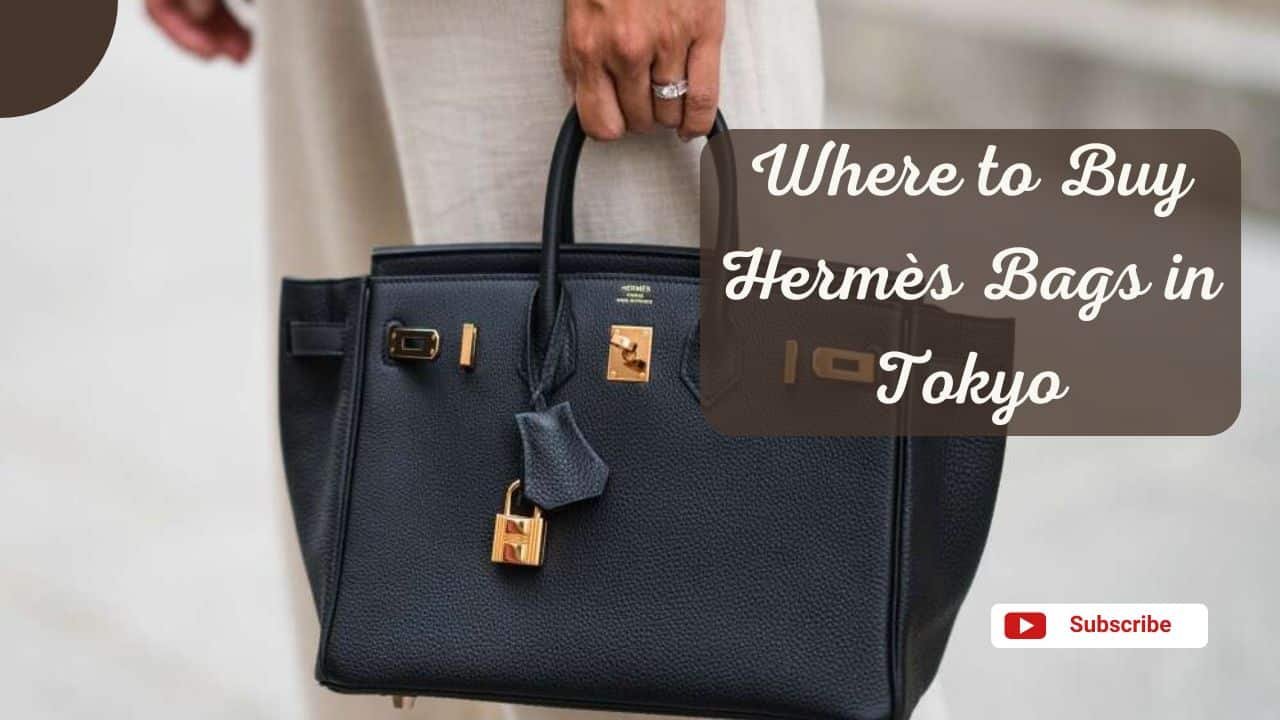
Hermès operates somewhat differently because of their quota system and allocation process, but prices in Japan remain favorable. A Birkin or Kelly bag, if you’re fortunate enough to be offered one, will cost less in Japan than in most other markets.
Beyond Hermès, brands like Cartier, Van Cleef & Arpels (particularly meaningful as they have strong Japanese connections), and Rolex all show notable price advantages in Japan.
Even contemporary luxury brands like Loewe, Bottega Veneta, and Celine offer better value in Japan, with savings typically ranging from 15-20% after tax refunds.
The consistency of these savings across nearly all luxury categories makes Japan uniquely attractive for shoppers looking to purchase multiple items.
Best Luxury Shopping Destinations in Japan
Tokyo’s Premier Shopping Districts
Ginza: The Luxury Capital
If luxury shopping were a religion, Ginza would be its Vatican.
This gleaming district in central Tokyo houses virtually every major luxury brand imaginable, often with multiple-story flagship stores that feel more like museums than shops.
The Chanel building, the Hermès store, the Louis Vuitton Matsuya—these aren’t just retail spaces; they’re architectural statements.
Shopping in Ginza offers several advantages beyond just product selection. The service level is extraordinary, with many staff members speaking English and other languages.
The area is compact and walkable, meaning you can compare prices and offerings from multiple brands within an afternoon. Plus, Ginza’s major department stores like Mitsukoshi and Wako offer curated luxury selections with excellent tax refund services.
Omotesando and Aoyama
For a slightly more relaxed vibe with equally impressive luxury credentials, head to Omotesando and its neighboring area Aoyama. This tree-lined boulevard is Tokyo’s answer to Paris’s Champs-Élysées, featuring flagship stores from Dior, Prada, Louis Vuitton, and more.
The architecture here is stunning—many luxury brands commissioned famous architects to design their Tokyo locations.
Omotesando Hills, a multilevel shopping complex, houses additional luxury and contemporary brands in a beautiful architectural space. The area also offers fantastic cafes and restaurants, making it easy to spend an entire day shopping, dining, and soaking in the atmosphere.
Osaka’s High-End Shopping Scene
Don’t overlook Osaka if you’re traveling beyond Tokyo. The Shinsaibashi and Umeda districts offer excellent luxury shopping with fewer tourists than Tokyo, potentially meaning better availability of popular items.
The service is equally impeccable, and prices are identical to Tokyo—all luxury brands maintain consistent pricing across Japan.
Osaka’s Hankyu and Hanshin department stores are legendary, offering extensive luxury selections under one roof. If you prefer the efficiency of department store shopping to visiting individual boutiques, Osaka’s offerings are world-class.
Airport Duty-Free Opportunities
Both Narita and Haneda airports in Tokyo, as well as Kansai International Airport in Osaka, have impressive duty-free luxury offerings. While selection is more limited than city boutiques, airport shopping offers last-minute opportunities and sometimes exclusive travel retail items.
However, prices are typically similar to city stores after tax refunds, so don’t expect additional savings—the convenience is the main benefit.
Which Brands Offer the Best Savings in Japan?
Not all luxury brands show the same price differentials in Japan.
French luxury houses—Louis Vuitton, Chanel, Dior, Hermès—tend to offer the most significant savings, often 20-30% compared to US or European prices.
This is partly because these brands have less need to inflate prices in Japan’s mature market.
Italian brands like Gucci, Prada, Bottega Veneta, and Fendi also show solid savings, typically 15-20%.
Swiss watchmakers vary more widely—some models of Rolex, Patek Philippe, and Audemars Piguet show excellent value, while others are priced more comparably to global markets.
Interestingly, some brands that are particularly popular in Japan, like Goyard or Moynat, may not show dramatic savings because Japanese demand keeps prices firm. However, the availability of these more exclusive brands in Japan is often better than elsewhere, which has its own value.
Timing Your Purchase: Seasonal Sales and Best Times to Shop
Here’s something many shoppers don’t realize: luxury brands in Japan do participate in seasonal sales, though in a very limited way. The major sale periods are January (after New Year) and July-August (summer sale season).
However, don’t expect deep discounts on current season items or classic pieces—sales typically apply to previous season items and less popular styles.
The best time to shop for maximum savings isn’t necessarily during sales but when the yen is weakest against your home currency. Monitor exchange rates in the months before your trip.
Even a 5% favorable shift in exchange rates can mean significant additional savings on expensive purchases.
Avoiding peak tourist seasons (Golden Week in late April/early May, cherry blossom season in late March/early April, and New Year holidays) can make your shopping experience more pleasant with shorter lines and more attentive service, though prices remain constant year-round.
Documentation Required for Tax-Free Shopping
The documentation requirements for tax-free shopping in Japan are refreshingly simple. You need:
- Your passport: This is absolutely essential. The store will photocopy relevant pages and attach tax exemption documentation to it. Digital photos won’t work—you need your physical passport.
- Temporary visitor status: Your passport must show you entered Japan on a temporary visitor visa, which is standard for tourists. Long-term residents and people on work visas don’t qualify for tax exemption.
- Proof of departure: Most stores don’t require this upfront, but technically, tax-free goods are meant for export within six months.
That’s it. No complicated forms, no lengthy processing times.
The entire tax exemption process typically takes just a few minutes at checkout.
The store will provide you with a receipt stapled to your passport showing the tax exemption, which customs officials may check (though they rarely do) when you leave Japan.
Potential Pitfalls and Things to Watch Out For
While luxury shopping in Japan is generally straightforward, a few potential issues deserve attention:
Sizing differences: Japanese sizing runs smaller than Western sizing, particularly for clothing and shoes. A Japanese size 40 in women’s shoes might fit like a US 8.5-9, not a 9-9.5. Always try items on and don’t assume your usual size will fit.
Product availability: Popular items, especially limited editions or new releases, can sell out quickly. Japan’s luxury market is highly active, and local customers often snap up coveted pieces. If you have your heart set on a specific item, call ahead or have your hotel concierge check availability.
Language barriers: While many luxury boutiques in Tokyo have English-speaking staff, smaller stores or locations outside major tourist areas may not. Download a translation app or bring a Japanese-speaking friend if you’re planning to shop beyond the main luxury districts.
Customs declarations: Don’t forget that your home country may have customs duties on luxury goods purchased abroad. The US allows $800 per person duty-free every 30 days, which covers most single luxury purchases but could be exceeded if you’re buying multiple expensive items. Research your home country’s customs regulations before your trip.
Authentication concerns: Stick to official brand boutiques, reputable department stores, and authorized dealers. Japan has some resale luxury stores (like Komehyo or Brand Off) that offer genuine items, but authentication can be trickier. For tax-free shopping purposes and peace of mind, buying directly from brand stores is always safest.
How Much Can You Actually Save?
Let’s do the math with a realistic shopping scenario. Suppose you’re planning to purchase:
- One Louis Vuitton Neverfull MM bag: Save approximately $700
- One Chanel Classic Flap Medium: Save approximately $2,200
- One Hermès Oran sandals: Save approximately $150
- One Cartier Love bracelet: Save approximately $800
Total savings: $3,850
This doesn’t even account for smaller purchases—scarves, wallets, jewelry, watches—that can add up to additional savings. If you’re furnishing an entire wardrobe or making investment pieces, a dedicated shopping trip to Japan can literally pay for itself through the savings achieved.
For a more modest shopping trip with one or two bags and some accessories, expect to save $1,000-2,000 compared to purchasing the same items at home. That’s a significant amount that can fund your accommodation, meals, or additional experiences during your Japan trip.
Customs Regulations When Bringing Luxury Goods Home
Understanding your home country’s customs regulations is crucial for avoiding surprises when you return. Here’s what you need to know for major markets:
United States: You’re allowed $800 worth of goods duty-free every 30 days. Beyond this, luxury goods are typically taxed at 4-10% depending on the item category. Handbags, leather goods, and most accessories fall at the lower end. Keep all receipts and be prepared to declare purchases honestly.
European Union: EU residents returning from Japan must declare goods worth more than €430 (air travel) or €300 (sea travel). VAT and customs duties apply beyond these thresholds, potentially negating some of your Japan savings. However, if you’re purchasing high-value items, you may still come out ahead.
United Kingdom: Post-Brexit rules allow £390 duty-free for most travelers. Luxury goods above this threshold face 20% VAT plus potential customs duty, making careful calculation essential.
Australia: Australians get A$900 duty-free, with duties and 10% GST applying beyond this. Given Australia’s particularly high luxury prices, even with duties, buying in Japan often makes financial sense.
Canada: Canadians have a C$800 exemption after 48 hours abroad, though only C$200 after less than 48 hours. Plan your trip length accordingly if making major purchases.
The key strategy is honesty with customs officials combined with smart planning. Wear some of your new purchases on the return journey (a watch, handbag, jewelry) to demonstrate personal use rather than commercial importing. Keep receipts organized and declare everything properly—the penalties for not declaring luxury goods far exceed any duties you might owe.
The Resale Value Factor
Here’s an angle that sophisticated luxury shoppers consider: resale value. Luxury goods, particularly from brands like Hermès, Chanel, and Rolex, often hold or even appreciate in value. When you purchase these items at 20-30% below retail prices in other markets, you’re not just saving money—you’re creating immediate equity.
Consider this scenario: You purchase a Chanel Classic Flap in Japan for $7,700 after tax refund. The same bag retails for $10,200 in the US. If you later decide to sell it on the secondary market, even at 70% of US retail (a conservative estimate for a well-maintained Chanel), you’d recoup $7,140—meaning your effective cost was just $560 for potentially years of use. That’s luxury rental pricing for outright ownership.
The Japanese market itself is known for luxury resale, with many items from Japan commanding premium prices in global secondary markets because buyers trust Japan’s emphasis on condition and authenticity. Luxury items purchased in Japan often carry the assumption of excellent care and genuine provenance.
Conclusion: Is Japan Still the Best Destination for Luxury Shopping in 2026?
After examining currency factors, tax refunds, pricing structures, and practical considerations, the answer is a resounding yes—Japan remains one of the world’s premier destinations for luxury shopping in 2026. While the yen has strengthened somewhat from its historic lows, the combination of competitive pricing, excellent tax refund systems, and extraordinary service continues to make Japan uniquely attractive for luxury purchases.
The savings are real, substantial, and consistent across virtually all major luxury brands. When you factor in Japan’s incredible culture, cuisine, and travel experiences, adding luxury shopping to your itinerary becomes a no-brainer. You’re not just buying handbags and watches; you’re investing in pieces that will remind you of your Japanese adventure every time you use them.
Whether you’re a serious luxury collector looking to acquire investment pieces or a first-time luxury buyer wanting to maximize value, Japan offers an unmatched combination of selection, service, savings, and experience. The only question is: which luxury district will you visit first?
FAQs
1. Do I need to pay customs duties on luxury goods purchased in Japan when returning home?
It depends on your home country’s regulations and the value of your purchases. Most countries have duty-free allowances (typically $800-1000 USD equivalent for personal goods). Beyond this threshold, you’ll need to declare items and may face duties ranging from 4-20% depending on your country and the product category. Always declare purchases honestly and keep receipts organized to avoid penalties.
2. Can I get tax refunds on luxury goods if I’m only transiting through Japan?
Yes, as long as you enter Japan on a temporary visitor visa (which includes transit), you’re eligible for tax refunds. You don’t need to stay a minimum number of days. However, you must have your physical passport with you when making purchases, as stores need to verify your visitor status and attach documentation to your passport.
3. Are luxury goods from Japanese boutiques authentic and covered by international warranty?
Absolutely. Luxury goods purchased from official brand boutiques, authorized department stores, and recognized retailers in Japan are 100% authentic and come with international warranty cards. These purchases are covered by the same global warranty policies as items bought anywhere else. Keep your receipts and warranty documentation when traveling.
4. Which luxury brand offers the biggest savings in Japan compared to other countries?
French luxury brands, particularly Chanel, Louis Vuitton, and Hermès, typically offer the most significant savings in Japan, often 25-30% below US prices after tax refund. Chanel’s Classic Flap bags show some of the most dramatic price differences, with savings of $2,000 or more compared to US retail prices. Japanese watch brands like Grand Seiko also offer excellent value in their home market.
5. Can I shop tax-free online in Japan and have items shipped internationally?
Unfortunately, no. Japan’s tax-free shopping system only applies to in-person purchases where you present your passport and export the goods yourself when leaving Japan. Online purchases shipped internationally don’t qualify for tax exemption, and you may face import duties in your home country. To maximize savings, plan in-person shopping visits to physical boutiques and department stores during your Japan trip.