



A Comprehensive Guide to Acquiring the World’s Most Coveted Handbag
In the rarefied world of luxury goods, few objects command the reverence, desire, and financial gravity of the Hermès Birkin. Born from a chance encounter between Jane Birkin and Jean-Louis Dumas on a Paris-to-London flight in 1984, this singular handbag has transcended its utilitarian origins to become a cultural artifact, a store of value, and an enduring symbol of quiet prestige.
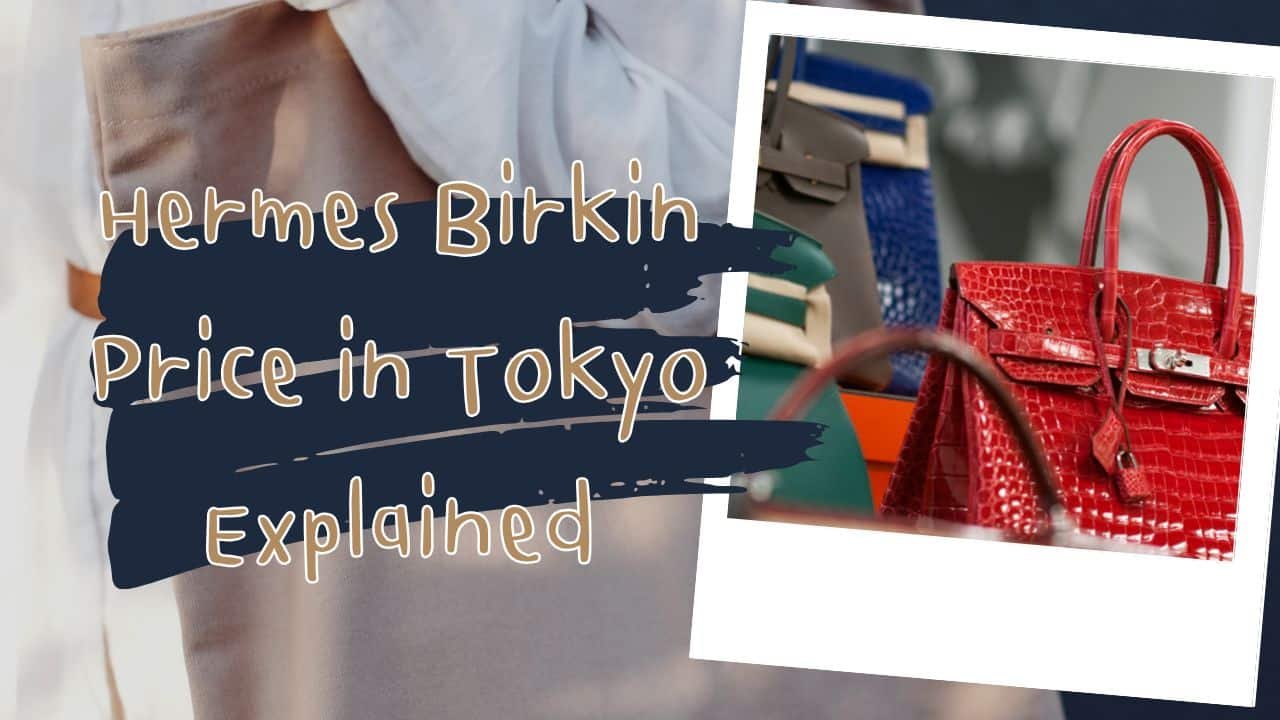
For those navigating Tokyo’s sophisticated luxury landscape, understanding the Hermès Birkin price in Tokyo explained through the lens of market dynamics, craftsmanship, and global demand is essential — whether one approaches the pursuit as a collector, an investor, or a connoisseur of exceptional craft.
Tokyo occupies a distinctive position in the global Birkin ecosystem. As the capital of the world’s third-largest luxury market, the city offers an unparalleled concentration of Hermès boutiques, elite resale dealers, and private consignment networks.
Yet the mechanics of acquiring a Birkin here — and the pricing structures that govern both primary and secondary channels — differ meaningfully from those in Paris, New York, or Hong Kong. This editorial examines those distinctions with the analytical depth they warrant.
What follows is not a shopping guide but rather a measured exploration of value, scarcity, and the sophisticated market forces that determine what a Birkin truly costs in one of the world’s most discerning cities.
The Hermès Birkin Price in Tokyo: Retail Versus Market Reality
At the boutique level, Hermès maintains a global pricing architecture that is remarkably consistent, adjusted primarily for local taxation and currency.
A standard Birkin 25 in Togo leather, for instance, carries a retail price in Tokyo that hovers in the range of ¥1,500,000 to ¥1,700,000 — roughly aligned with its Euro-equivalent price once Japan’s consumption tax is factored in.
The Birkin 30 and Birkin 35 follow a graduated scale, with exotic skins such as crocodile Niloticus or ostrich commanding multiples that can exceed ¥5,000,000 at retail.
However, retail price and acquisition cost are fundamentally different concepts when discussing the Birkin. The well-documented scarcity strategy employed by Hermès means that securing an allocation at any boutique — including the flagship Hermès Ginza or the Maison Hermès in the Renzo Piano-designed glass block tower — typically requires an established purchase history.
This creates a secondary market premium that, in Tokyo, can range from 1.5 to 3 times the retail price depending on size, leather, colour, and hardware configuration.
Why Tokyo Commands a Unique Position in the Global Birkin Market
Japan’s relationship with Hermès is among the deepest and most historically layered of any market worldwide. The maison established its Tokyo presence in 1979, and Japanese consumers have since cultivated a reputation for meticulous care, authentication expertise, and an aesthetic sensibility that prizes condition above all else.
This cultural disposition has made Tokyo’s pre-owned Birkin market one of the most trusted on earth.
International buyers — particularly those from mainland China, Southeast Asia, and the Middle East — frequently source Birkins through Tokyo’s secondary market precisely because of this trust factor.
The city’s leading resale boutiques, concentrated in Ginza, Omotesando, and the quieter enclaves of Aoyama, maintain authentication standards that rival or exceed those of global auction houses. This institutional credibility supports price stability and, in many cases, price appreciation.
Craftsmanship as the Foundation of Value
Any serious discussion of Birkin pricing must begin with what the object actually is: a handcrafted leather good requiring approximately 18 to 25 hours of labour by a single artisan at one of Hermès’ ateliers in France.
Each Birkin is saddle-stitched using the sellier technique with linen thread coated in beeswax — a method that predates the maison’s foray into handbags by more than a century.
The leathers themselves — whether Clemence, Epsom, Swift, or the exotic variants — are sourced through supply chains that Hermès controls with extraordinary vertical integration.
The house owns its own tanneries and crocodile farms, ensuring a level of quality governance that few competitors can replicate. It is this uncompromising approach to materials and labour that establishes the Birkin’s baseline value, upon which market forces then build.
The Role of Colour and Configuration
Within Tokyo’s market, specific colour and hardware combinations command notable premiums. Neutral tones — Étoupe, Gold, Black — in versatile sizes such as the Birkin 25 remain the most liquid and consistently appreciate.
Limited-production colours released seasonally, as well as special-order (horseshoe) pieces with personalised colour blocking, attract collectors willing to pay significant premiums.
Rose Sakura, a shade with particular resonance in Japan, has historically outperformed global averages in Tokyo’s secondary market.
The Birkin as an Investment Vehicle
The financial performance of the Birkin has been well-documented in academic and industry analyses.
A widely cited study by Baghunter noted that Birkin bags have outperformed both the S&P 500 and gold over a 35-year period, delivering an average annual return of approximately 14.2 percent.
While past performance is never a guarantee, several structural factors continue to support long-term value appreciation.
- Controlled scarcity: Hermès deliberately limits production volume, estimated at roughly 200,000 units annually across all bag models, ensuring demand perpetually outstrips supply.
- Brand equity resilience: Hermès has never engaged in discounting, outlet distribution, or brand dilution strategies, preserving pricing power across economic cycles.
- Tangible asset characteristics: Unlike equities or digital assets, a Birkin is a portable, discreet, and universally recognised store of value — attributes that resonate particularly with high-net-worth individuals in Asia-Pacific markets.
- Auction validation: Record-setting results at Christie’s and Sotheby’s — including a Himalaya Birkin that sold for over $400,000 — continually recalibrate the ceiling for exceptional pieces.
Navigating Tokyo’s Secondary and Resale Market
For international buyers and collectors, Tokyo’s pre-owned luxury infrastructure represents one of the most sophisticated ecosystems globally. The city’s resale market operates with a degree of professionalism, transparency, and curatorial sensibility that distinguishes it from virtually every other major city.
Leading establishments offer comprehensive documentation, condition grading systems that align with international standards, and — in many cases — private viewing appointments for high-value pieces.
The experience of acquiring a Birkin through these channels is deliberately calibrated to mirror the discretion and attentiveness of the primary boutique experience, a quality that discerning buyers have come to expect.
Authentication and Provenance
Tokyo’s market has also pioneered advanced authentication practices. Specialist dealers employ proprietary inspection protocols covering stitching regularity, hardware engraving, stamp placement, and leather grain analysis.
For pieces valued in the millions of yen, third-party authentication services provide an additional layer of confidence. This infrastructure directly supports the premium that Tokyo-sourced Birkins command when they re-enter the global market.
Cultural Context: The Birkin in Japanese Luxury Society
Japan’s luxury consumption patterns are shaped by deeply rooted aesthetic principles — mono no aware, the appreciation of transient beauty, and wabi-sabi, the reverence for imperfection and authenticity.
These values align naturally with Hermès’ own philosophy: objects made to endure, to develop patina, to become more characterful with use rather than less.
In Tokyo’s social landscape, the Birkin functions less as a signalling device and more as an expression of refined taste. It is carried with restraint, often in understated colourways, and its presence communicates an intimate familiarity with craft rather than conspicuous display. This cultural framing contributes to the sustained desirability of the Birkin within Japan and reinforces the market’s stability.
The Impact of Currency Fluctuations on Pricing
For international buyers, the yen’s valuation against the dollar, euro, and yuan introduces a significant variable.
Periods of yen weakness — such as the depreciation observed between 2022 and 2024 — have historically driven increased inbound luxury purchases in Tokyo, as foreign buyers find both retail and resale Birkins effectively discounted relative to their home markets. Sophisticated collectors monitor these currency dynamics closely, timing acquisitions to maximise purchasing power.
It is worth noting that Hermès periodically adjusts its yen-denominated retail prices to reflect sustained currency shifts, though such adjustments tend to lag the foreign exchange market by several quarters — creating windows of opportunity for the strategically minded buyer.
Key Factors to Consider When Acquiring a Birkin in Tokyo
- Size and leather selection: The Birkin 25 in durable leathers such as Togo and Epsom offers the strongest combination of wearability and resale value.
- Condition grading: In Tokyo’s secondary market, pieces graded as “”new”” or “”excellent”” command the highest premiums and retain value most effectively.
- Provenance documentation: Original receipts, box, dust bag, and care cards contribute meaningfully to resale value and buyer confidence.
- Dealer reputation: Acquiring through established, reputable channels mitigates authentication risk and ensures recourse in the unlikely event of a dispute.
- Tax considerations: International visitors may qualify for tax-free purchasing, further enhancing the value proposition of acquiring in Tokyo.
A Forward-Looking Perspective on Birkin Pricing
The structural dynamics that underpin Birkin pricing — constrained supply, expanding global wealth, impeccable brand stewardship, and deepening collector interest — show no indication of softening.
If anything, the entry of younger ultra-high-net-worth individuals into the luxury collecting space, combined with the growing sophistication of Asian secondary markets, suggests continued upward pressure on prices for the most desirable configurations.
Tokyo, with its institutional depth, cultural credibility, and authentication infrastructure, is poised to remain a central hub in this evolving marketplace.
The city’s capacity to serve both domestic collectors and an increasingly global clientele positions it as an indispensable reference point for anyone seeking to understand the true economics of Birkin ownership.
Conclusion
To fully appreciate the Hermès Birkin price in Tokyo explained in its proper context is to recognise that this is not merely a transaction but an engagement with a living market — one shaped by centuries of artisanal tradition, decades of brand discipline, and the exacting standards of the world’s most knowledgeable luxury consumers.
Tokyo offers a rare convergence of trust, expertise, and access that few cities can rival. For those who approach the pursuit with patience, discernment, and a long-term perspective, the Birkin remains what it has always been: an object of enduring value in every sense of the word.”