




Tokyo has long held a singular position in the global luxury hierarchy — a city where connoisseurship is not merely encouraged but culturally embedded. From the meticulous presentation of goods in Ginza’s flagship boutiques to the reverential care with which pre-owned pieces are handled in Omotesando’s curated resale ateliers, the Japanese capital operates by standards that few other markets can approach.
For discerning collectors and international buyers seeking heritage pieces from the house of Louis Vuitton, this city represents an unparalleled destination.
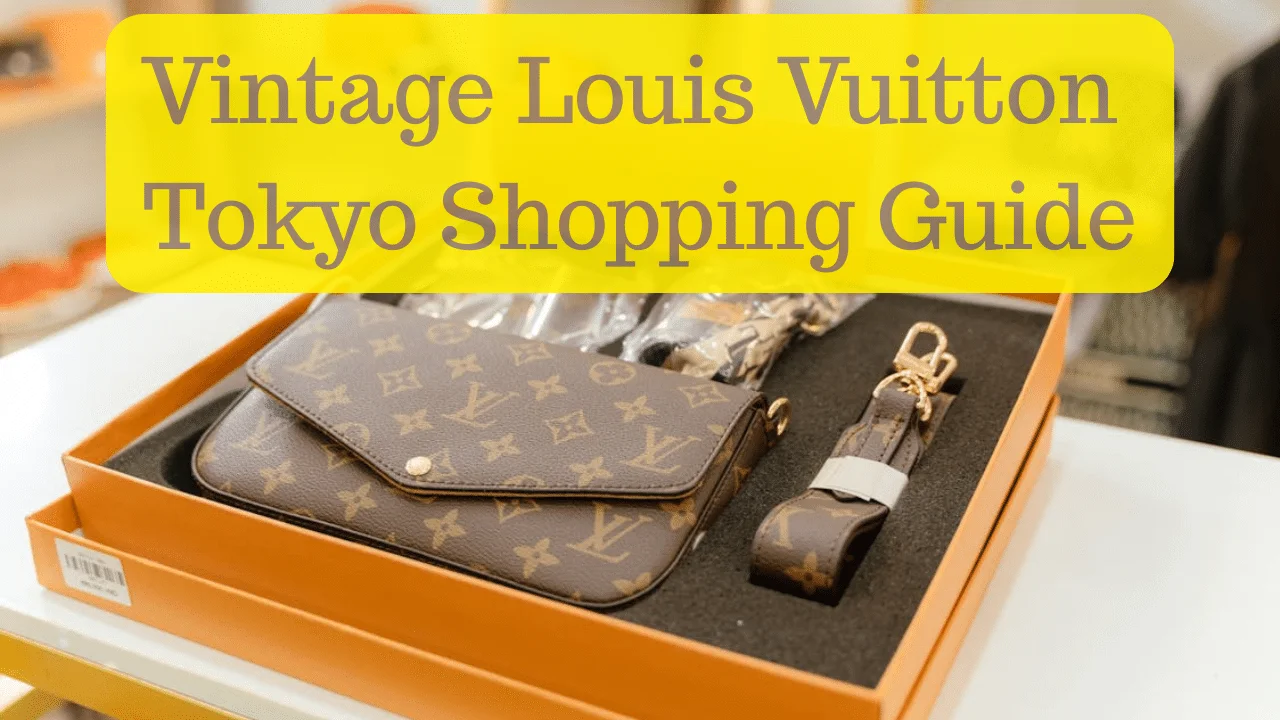
This Vintage Louis Vuitton Tokyo Shopping Guide is designed for those who understand that acquiring a storied luxury piece is never merely a transaction. It is an exercise in authentication, provenance, material integrity, and cultural literacy. Tokyo’s secondary luxury market — estimated to account for a significant portion of the global pre-owned luxury trade — offers conditions that are uniquely favorable: exceptional product condition, rigorous authentication protocols, and a depth of inventory that reflects decades of Japan’s deep relationship with Maison Louis Vuitton.
Whether one is pursuing a pristine 1980s Monogram Keepall, a rare Epi Leather piece from a discontinued colorway, or an early-production Damier Ebène trunk, Tokyo offers the most sophisticated environment in which to conduct such a search. Understanding how to navigate this market, however, requires more than a passing familiarity with the brand. It demands a refined awareness of the city’s luxury ecosystem.
Why Tokyo Dominates the Vintage Louis Vuitton Market
Japan’s relationship with Louis Vuitton dates to the late nineteenth century, when the Maison’s trunks first arrived in a country already deeply attuned to the philosophy of masterful craftsmanship.
By the 1970s and 1980s, Japan had become one of Louis Vuitton’s most important global markets, and the volume of pieces acquired during those decades — many kept in impeccable condition — has created an extraordinary reservoir of vintage inventory.
The cultural disposition toward preservation is a decisive factor. In Tokyo, a thirty-year-old Speedy may present with patina so gentle it appears nearly unworn. Brass hardware retains its original finish. Canvas maintains structural integrity. This is not coincidental; it reflects a consumer culture in which the care of possessions is considered a matter of personal discipline. For the international buyer, this translates into access to vintage pieces in conditions that are exceedingly rare elsewhere.
Additionally, Japan’s mature resale infrastructure — encompassing auction houses, consignment boutiques, and specialist dealers — ensures that authentication standards remain among the highest in the world. Many of Tokyo’s leading vintage luxury retailers employ in-house authentication teams with decades of experience, supplemented by advanced verification technologies.
Understanding the Geography of Vintage Louis Vuitton in Tokyo
Ginza and Yurakucho
Ginza remains the epicenter of luxury retail in Japan, and its surrounding blocks house several of the country’s most respected pre-owned luxury dealers. Establishments in this district tend to carry higher-tier pieces — rare trunks, limited editions, and items with notable provenance. Pricing reflects the premium positioning, but so does the level of service, documentation, and curatorial selectivity.
Omotesando and Aoyama
The tree-lined avenues of Omotesando have evolved into a destination for fashion-forward collectors. Vintage Louis Vuitton pieces here often include collaborative editions, runway-adjacent items, and pieces from specific creative director eras. The clientele skews toward those who view vintage luxury through an aesthetic and cultural lens rather than purely an investment framework.
Nakameguro and Daikanyama
These quieter residential-commercial neighborhoods harbor some of Tokyo’s most interesting boutique dealers — smaller operations with highly personal curation. For the collector willing to explore beyond the obvious districts, discoveries here can be exceptional, often at more measured price points than central Ginza.
Shinjuku and Ikebukuro
Larger-format resale retailers in these commercial hubs offer breadth of inventory. While the atmosphere is less intimate, the sheer volume of Louis Vuitton pieces available — particularly classic Monogram and Damier lines — provides a useful comparative base for understanding current market pricing and availability.
Authentication and Condition: Tokyo’s Uncompromising Standards
One of the most compelling reasons to pursue vintage Louis Vuitton in Tokyo is the authentication rigor that underpins the market. Japanese resale law, combined with industry self-regulation, has established a framework in which counterfeit goods are not merely discouraged but systematically excluded from reputable channels.
Leading Tokyo dealers evaluate pieces across multiple criteria:
- Date code verification and cross-referencing with known production records
- Canvas quality, print alignment, and material composition analysis
- Hardware assessment — weight, engraving depth, patina consistency
- Stitching count, thread quality, and construction technique analysis
- Provenance documentation, where available, including original receipts or repair records
For international buyers unfamiliar with the nuances of vintage Louis Vuitton authentication, engaging with Tokyo-based specialists offers a level of confidence that is difficult to replicate through online-only transactions. Many collectors find that an in-person consultation with an experienced dealer provides irreplaceable insight into the subtleties of a particular piece’s history and integrity.
Investment Value: Vintage Louis Vuitton as a Tangible Asset
The investment dimension of vintage Louis Vuitton has matured considerably over the past decade. What was once considered a niche pursuit within the broader collectibles market has gained recognition among wealth advisors and alternative asset strategists. Certain categories of vintage Louis Vuitton have demonstrated consistent value appreciation, particularly when condition, rarity, and provenance converge.
Key investment considerations for vintage Louis Vuitton include:
- Discontinued models: Pieces no longer in production, especially those from specific creative eras, tend to command premiums as supply diminishes
- Limited collaborations: Editions produced in partnership with notable artists or designers — such as the Stephen Sprouse graffiti collection or Takashi Murakami multicolor line — carry particular collector interest
- Condition rarity: A common model in extraordinary condition can outperform a rare model in compromised condition
- Trunk and hard-sided luggage: Historic Louis Vuitton trunks represent the apex of the secondary market, with exceptional examples achieving six-figure results at international auction
Tokyo’s market provides a distinct advantage for the investment-minded buyer: the probability of finding high-condition examples is materially greater here than in European or American markets. This condition premium, when combined with rarity, creates a compelling value proposition for long-term holding strategies.
The Cultural Dimension: Louis Vuitton and Japanese Craftsmanship Philosophy
The affinity between Louis Vuitton and Japanese consumer culture extends beyond mere brand affinity. At its foundation lies a shared reverence for monozukuri — the art and philosophy of making things with care and precision. Louis Vuitton’s heritage as a trunk-maker, rooted in bespoke craftsmanship and functional elegance, resonates deeply with a culture that has elevated artisanal practice to a philosophical discipline.
This alignment is visible not only in Japan’s consumption of Louis Vuitton goods but in the way vintage pieces are treated in the secondary market. Restoration services in Tokyo — from patina conditioning to hardware re-finishing — are performed with a sensitivity that respects the original intent of the piece.
Collectors who acquire vintage Louis Vuitton in Tokyo often remark on the care with which dealers present, package, and discuss each item, transforming a commercial exchange into something approaching a cultural experience.
Consumer Behavior Trends: What International Buyers Should Know
Several notable trends are shaping the vintage Louis Vuitton market in Tokyo.
First, there has been a discernible shift toward earlier-era pieces — pre-1990s production — driven by collectors who value the material qualities associated with older manufacturing processes. Canvas weight, leather sourcing, and hardware finishing from this period are widely regarded as representing the pinnacle of Louis Vuitton’s production standards.
Second, the weakening of the Japanese yen against major currencies has created a pricing environment that is increasingly attractive for international buyers. Pieces that might command significant premiums in Paris, London, or New York are often available at more favorable price points in Tokyo, even before accounting for tax-free purchasing options available to foreign visitors.
Third, a growing community of younger collectors — particularly from Southeast Asia, Greater China, and the Middle East — is entering the Tokyo market, drawn by both the inventory depth and the city’s broader appeal as a luxury travel destination. This evolving buyer profile is gradually shifting inventory composition, with dealers increasingly sourcing and presenting pieces that appeal to a more globally diverse clientele.
Navigating the Experience: Practical Considerations for Collectors
For those planning a dedicated vintage Louis Vuitton acquisition trip to Tokyo, several practical considerations merit attention. Appointment-based shopping is increasingly common among the city’s most respected dealers, particularly for high-value or rare items. Expressing specific collecting interests in advance often enables dealers to prepare relevant inventory for private viewing — a level of service that reflects the consultative nature of Tokyo’s luxury resale culture.
Language should not present a significant barrier; many leading dealers employ multilingual staff, and the shared vocabulary of luxury goods transcends linguistic boundaries. Nonetheless, engaging the services of a knowledgeable local advisor — someone fluent in both the language and the market — can meaningfully enhance the experience and ensure access to opportunities that may not be publicly listed.
Payment protocols, export considerations, and tax refund procedures are well-established for international transactions in Tokyo. Most reputable dealers offer seamless tax-free processing for non-resident buyers, and shipping services with appropriate insurance coverage are standard for high-value acquisitions.
The Secondary Market Outlook: Sustained Demand and Selective Appreciation
Looking ahead, the vintage Louis Vuitton market in Tokyo shows no indication of contraction. Supply, while substantial, is finite — a fundamental dynamic that favors long-term value retention for well-selected pieces. As first-generation Japanese collectors begin to release holdings, a secondary wave of inventory is entering the market, offering fresh opportunities for astute buyers. However, the most exceptional pieces are increasingly being absorbed by private collections and institutional buyers, suggesting that the window for acquiring certain categories at current valuations may not remain indefinitely open.
Conclusion: The Definitive Destination for Vintage Louis Vuitton
This Vintage Louis Vuitton Tokyo Shopping Guide reflects a market that stands apart — not merely for its scale, but for its integrity, its cultural depth, and its uncompromising standards. Tokyo offers the serious collector an environment in which condition, authenticity, and curatorial sensibility converge to create purchasing experiences that are as intellectually rewarding as they are materially significant. For those who approach vintage luxury with the discipline it warrants, this city remains the preeminent global destination — a truth that becomes self-evident the moment one holds a flawlessly preserved piece in hand and recognizes that some markets simply operate on a different plane of excellence.