



A Comprehensive Guide to the World’s Most Discerning Luxury Market
Tokyo has long occupied a singular position in the global luxury ecosystem — a city where craftsmanship is not merely appreciated but revered, where discretion is a cultural virtue, and where the pursuit of quality transcends trend.
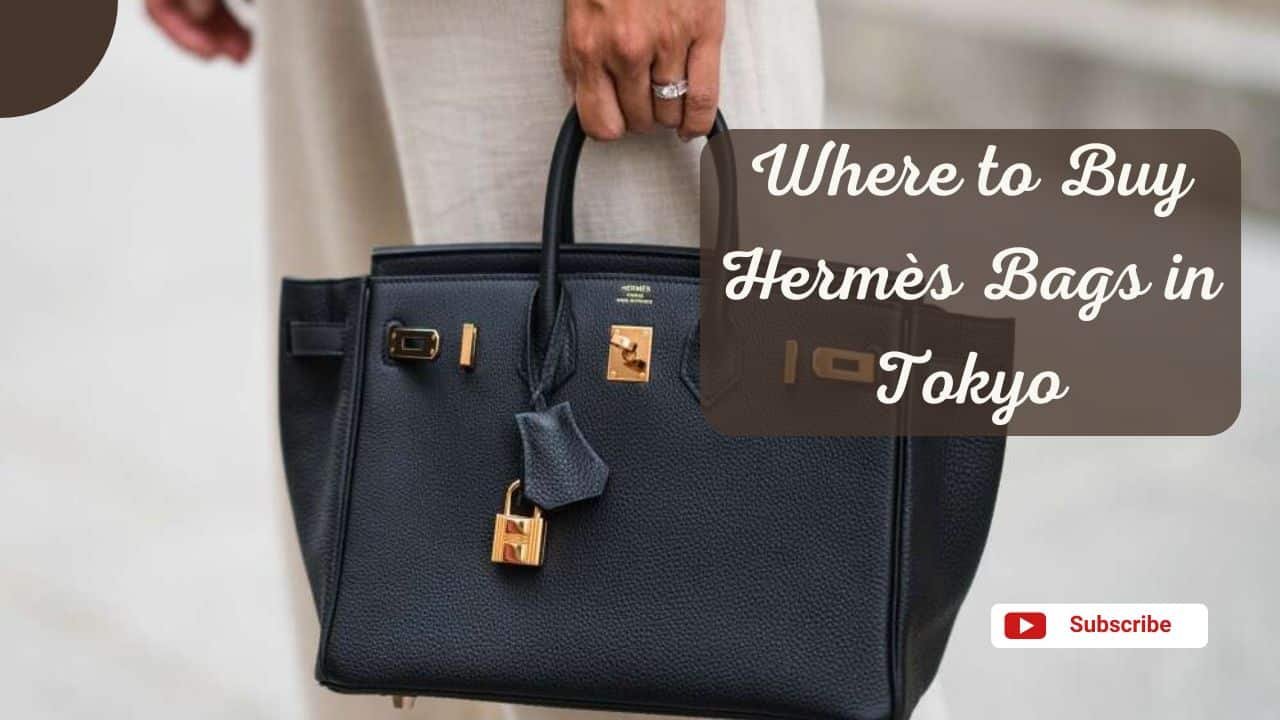
For collectors, investors, and connoisseurs seeking the most coveted leather goods in existence, understanding where to buy Hermès bags in Tokyo is not simply a matter of retail navigation. It is an exercise in understanding one of the world’s most sophisticated luxury markets, one that operates with its own codes, rhythms, and distinct advantages.
The Japanese capital accounts for a significant share of global Hermès revenue, and the relationship between the maison and its Tokyo clientele has deepened over decades. This is a city where a Birkin or Kelly is understood not as a status symbol alone but as an object of enduring material and aesthetic integrity.
The result is a marketplace of remarkable depth — spanning flagship boutiques, curated resellers, auction houses, and private dealer networks — each offering a different point of entry into the Hermès universe.
For international buyers arriving in Tokyo with acquisition in mind, the landscape rewards patience, knowledge, and a willingness to engage with the city’s unique luxury culture. What follows is an authoritative guide to that landscape, informed by market intelligence and a commitment to editorial precision.
The Hermès Boutique Experience in Tokyo
The most direct path to acquiring an Hermès bag in Tokyo begins, naturally, at the maison’s own boutiques. Hermès operates several locations across the city, with the Ginza flagship standing as the crown jewel — a striking structure designed by Renzo Piano that embodies the brand’s fusion of tradition and contemporary vision.
Additional boutiques in Marunouchi, Roppongi Hills, and the Isetan department store in Shinjuku each carry their own character and inventory distinctions.
Purchasing a quota bag — the Birkin, Kelly, or Constance — directly from an Hermès boutique in Tokyo follows the same carefully guarded protocols observed worldwide. There is no waitlist in the formal sense; rather, the process rewards consistent engagement with the brand, a demonstrated purchase history across categories, and the cultivation of a relationship with a dedicated sales associate.
Tokyo boutiques are known for their meticulous service standards, and the staff operate with a level of attentiveness that reflects the broader Japanese commitment to omotenashi, or the spirit of selfless hospitality.
What International Buyers Should Know
Visitors from abroad benefit from Japan’s tax-free shopping program, which exempts qualifying purchases from the ten percent consumption tax. When applied to goods at Hermès price points, this represents a meaningful reduction. Currency fluctuations — particularly the yen’s periodic weakness against the dollar, euro, and pound — have, at times, made Tokyo one of the most advantageous cities in the world for luxury acquisition. Astute buyers monitor exchange rates as closely as they monitor inventory.
Tokyo’s Pre-Owned and Secondary Market: A World of Its Own
Where Tokyo truly distinguishes itself from Paris, London, or New York is in the breadth, quality, and trustworthiness of its secondary market for Hermès bags. Japan’s pre-owned luxury sector is, by most expert assessments, the most developed and reliable in the world.
This is a function of culture: Japanese consumers maintain their possessions with extraordinary care, and the domestic market has established rigorous authentication and grading standards that have no true equivalent elsewhere.
The result is an inventory of pre-owned Birkins, Kellys, Constances, and other sought-after models that frequently approach or match the condition of brand-new pieces. For collectors seeking discontinued colors, exotic leathers, or limited-edition collaborations, Tokyo’s secondary market is an unrivaled resource.
Key Districts for Pre-Owned Hermès
Several Tokyo neighborhoods have emerged as essential destinations for secondary-market buyers:
- Ginza: Home to established resellers operating from discreet, appointment-friendly showrooms, often carrying investment-grade pieces with complete documentation.
- Omotesando and Aoyama: Curated boutiques in this design-forward corridor specialize in rare and vintage Hermès, attracting a clientele that values connoisseurship.
- Shinjuku and Shibuya: Larger-format luxury resale operations offer extensive inventories, with authentication processes visible and transparent to the buyer.
- Nakameguro: An emerging destination for independent dealers offering carefully sourced pieces in intimate retail settings.
Authentication and Condition: The Tokyo Standard
One of the principal reasons international collectors gravitate to Tokyo is the market’s authentication infrastructure. Major resellers employ in-house specialists trained to evaluate every element of an Hermès bag — from the stamp and stitching to the hardware plating, leather grain, and interior markings. Several firms have invested in proprietary verification technologies that supplement expert human assessment.
Condition grading in Tokyo tends to be conservative, which works in the buyer’s favor. A bag rated as “”excellent”” by a reputable Tokyo dealer will typically meet or exceed the equivalent grade assigned by international counterparts. This conservatism reflects a broader cultural disposition toward understatement and precision — qualities that align naturally with the Hermès ethos itself.
Investment Value: Why Tokyo Is a Strategic Acquisition Point
For those who approach Hermès bags through an investment lens, Tokyo offers several structural advantages. The city functions as both a source market and a price-discovery mechanism for the global secondary trade. Dealers in Tokyo often set pricing benchmarks that ripple outward to Hong Kong, Dubai, London, and New York.
Key investment considerations when purchasing in Tokyo include:
- Currency arbitrage: Yen depreciation cycles have historically created windows of exceptional value for foreign-currency buyers.
- Condition premium: The superior preservation standards of Japanese-sourced bags command higher resale values in international markets.
- Provenance confidence: Tokyo’s authentication rigor reduces counterparty risk, a material concern in a global market where sophisticated forgeries continue to proliferate.
- Access to rare configurations: Japan’s deep collector base means discontinued models, limited editions, and exotic-skin variants surface in Tokyo with greater frequency than in most other cities.
Hermès bags — particularly Birkins in sizes 25 and 30, and Kelly models in Sellier construction — have demonstrated consistent appreciation over the past two decades. Certain exotic-leather iterations have outperformed traditional financial assets over comparable periods. While past performance does not guarantee future results, the structural dynamics of limited supply and expanding global demand suggest a resilient market.
Craftsmanship and Heritage: Understanding What You Are Acquiring
Any serious discussion of Hermès acquisition must return to the object itself. Each Birkin and Kelly is constructed by a single artisan in Hermès’s French ateliers, a process that requires approximately eighteen to twenty-four hours of skilled hand labor. The leather is sourced from tanneries with which the maison has maintained relationships spanning generations. Hardware is produced in-house, and the saddle-stitching technique — sellier or retourné — has remained fundamentally unchanged since the nineteenth century.
This commitment to craft is what separates Hermès from the broader luxury goods industry and underpins the enduring desirability of its bags. Tokyo’s clientele, with its deep appreciation for artisanal tradition — informed by Japan’s own heritage of monozukuri, the art of making things — understands this distinction intuitively. It is one reason the city has become such a significant market for the brand.
The Role of Department Stores and Concessions
Tokyo’s department stores represent another dimension of the Hermès buying experience. Establishments such as Isetan Shinjuku, Mitsukoshi Ginza, and Takashimaya Nihonbashi house Hermès concessions that operate with a degree of autonomy from the standalone boutiques.
While quota bag availability follows the same allocation principles, certain seasonal items, accessories, and scarves may appear in department store concessions before — or instead of — the flagship locations. Experienced buyers cultivate relationships across multiple points of sale to maximize their exposure to inventory.
Private Dealers and Collector Networks
Beyond the visible retail landscape lies a quieter stratum of the Tokyo Hermès market: private dealers, collector circles, and invitation-only viewing events. These networks operate largely through referral and reputation, and they are where some of the most extraordinary pieces change hands — Himalaya Birkins, one-of-a-kind special orders, and vintage bags from the pre-stamp era.
Accessing these channels requires established credibility within the collector community, and for newcomers, engaging with a trusted advisor or consultant can facilitate introductions. The discretion of these transactions mirrors the broader culture of privacy that characterizes high-net-worth commerce in Japan.
Cultural Context: Why Tokyo Elevates the Buying Experience
Acquiring a Hermès bag in Tokyo is not merely a transaction. It is an experience shaped by the city’s broader aesthetic and cultural sensibilities. The attention to presentation — the wrapping, the service choreography, the spatial design of boutiques and showrooms — reflects a civilization that has elevated care and consideration to an art form. International buyers frequently note that the Tokyo purchasing experience adds a dimension of meaning to the acquisition that is difficult to replicate elsewhere.
This cultural resonance extends to the resale market, where dealers treat each bag as an object worthy of respect, displaying pieces with curatorial precision and providing documentation that approaches archival quality. It is this environment that sustains Tokyo’s reputation as the world’s most refined marketplace for pre-owned luxury goods.
Navigating the Market with Confidence
For those contemplating where to buy Hermès bags in Tokyo, preparation is essential. Prospective buyers should familiarize themselves with current retail pricing, secondary-market benchmarks, and the specific characteristics of the models they seek. Understanding leather types — Togo, Epsom, Swift, Barenia, and the various exotic skins — along with hardware options and sizing, ensures informed decision-making.
Equally important is an awareness of the market’s rhythm. New inventory cycles at boutiques, seasonal auction calendars, and the periodic emergence of exceptional pieces on the secondary market all create moments of opportunity for the prepared buyer.
Conclusion: Tokyo as the Definitive Destination
The question of where to buy Hermès bags in Tokyo ultimately reveals something larger about the city itself — its capacity to honor tradition while operating at the frontier of global luxury commerce. Whether one seeks the ritualized experience of a flagship boutique purchase, the thrill of discovering a rare vintage piece in a Ginza showroom, or the strategic advantage of acquiring investment-grade leather goods in a favorable currency environment, Tokyo accommodates every ambition with characteristic grace.
As global demand for Hermès continues to intensify and supply remains deliberately constrained, Tokyo’s role as a primary node in the worldwide Hermès market will only strengthen.
For the discerning buyer — one who values authenticity, condition, and the intangible qualities that distinguish a considered acquisition from a mere purchase — there is, quite simply, no city that offers more.