



In the world of luxury resale, few cities command the reverence that Tokyo has quietly earned over the past two decades. The Japanese capital has evolved into the definitive global destination for pre-owned haute couture, and nowhere is this more evident than in its remarkably deep market for heritage Chanel handbags.
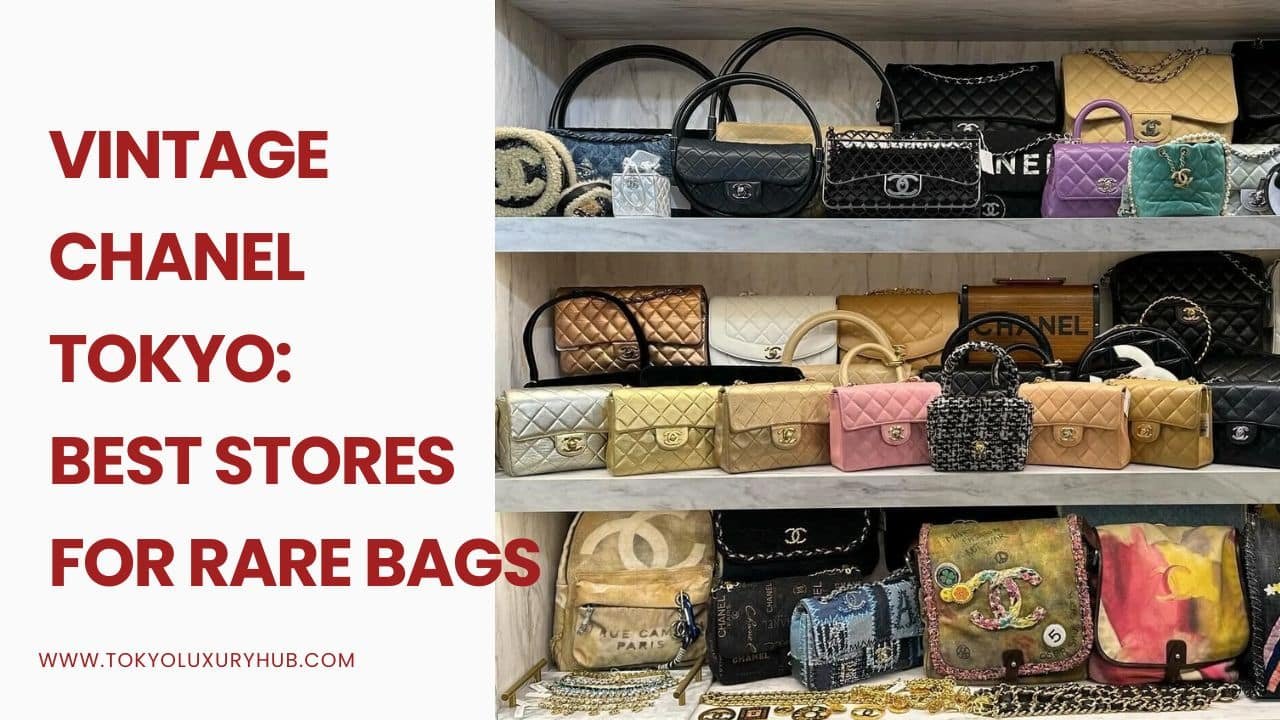
For collectors, investors, and connoisseurs who understand that provenance and condition define true value, the phrase vintage Chanel Tokyo: best stores for rare bags is not merely a search query — it is an invitation into one of the most sophisticated secondary luxury ecosystems on earth.
Tokyo’s position at the apex of this market is no accident. It is the product of a culture that reveres meticulous care, a consumer base that has purchased luxury goods at extraordinary volume for decades, and a resale infrastructure built on authentication standards that exceed those of virtually every other market.
The result is a city where a 1990s Chanel Classic Flap in lambskin can surface in near-unworn condition, where limited-edition pieces from Karl Lagerfeld’s most celebrated collections appear with startling regularity, and where the act of acquiring a vintage handbag carries the weight and ceremony of a fine art transaction.
For the international buyer arriving in Tokyo with acquisition in mind, understanding this landscape — its geography, its etiquette, its pricing dynamics, and its unspoken hierarchies is essential. What follows is an authoritative guide to navigating the city’s finest vintage Chanel destinations, informed by market intelligence and a deep appreciation for what makes Tokyo’s luxury resale culture singular.
Why Tokyo Dominates the Global Vintage Chanel Market
Japan has been one of Chanel’s most significant markets since the 1980s, a period during which the country’s economic ascendancy fueled extraordinary luxury consumption.
Millions of authentic Chanel handbags entered Japanese households during this era, many of which were stored with the fastidious care that characterizes Japanese ownership culture.
Bags were kept in dust covers, stored in climate-controlled environments, and in many cases carried only a handful of times before being retired.
This phenomenon created a vast reservoir of pristine vintage inventory that has no true parallel elsewhere. Cities like Paris, Milan, and New York possess their own resale markets, but none can match the breadth and condition quality of Tokyo’s supply.
When international dealers seek rare Chanel pieces a 1989 Diana Flap, a pre-collection Jersey Classic, or an early-2000s Reissue 2.55 in metallic aged calfskin — they frequently source from Tokyo.
The Authentication Advantage: Trust as Currency
What distinguishes Tokyo’s vintage luxury infrastructure is not merely inventory but integrity. Japanese resale boutiques operate under some of the most rigorous authentication protocols in the industry.
Stores employ in-house specialists who examine stitching cadence, hardware engravings, hologram sticker placement, leather grain patterns, and chain weight with a precision that borders on forensic analysis.
For the collector, this means a dramatically reduced risk profile compared with purchasing through international online platforms or less regulated markets. Several of Tokyo’s premier establishments provide certificates of authenticity, detailed condition reports, and in some cases, documentation of a bag’s complete ownership history.
This infrastructure of trust is a foundational reason why high-net-worth buyers from Hong Kong, Singapore, the Middle East, and North America increasingly view Tokyo as their primary sourcing destination.
Ginza: The Epicenter of Curated Vintage Luxury
No exploration of vintage Chanel in Tokyo begins anywhere other than Ginza. The district’s reputation as the city’s most prestigious commercial corridor extends seamlessly into the resale sphere.
Here, boutiques occupy refined ground-floor and upper-floor spaces along Chuo-dori and its adjacent streets, presenting vintage Chanel with the same reverence one might expect from a primary boutique.
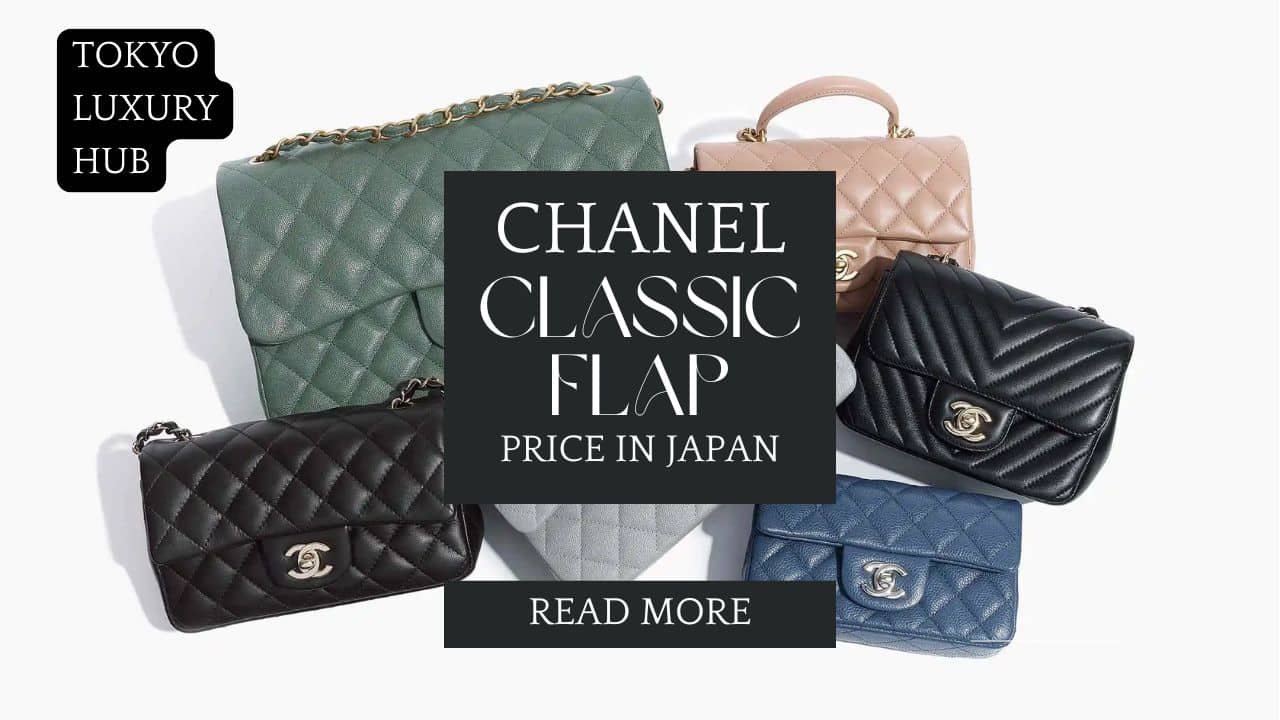
Stores in Ginza tend to specialize in investment-grade pieces: Classic Flaps and Boy Bags in timeless colorways, Jumbo and Maxi sizes that command premium secondary market values, and seasonal rarities from runway collections that have appreciated significantly since their original release.
The presentation is uniformly immaculate — individual lighting, glass vitrines, white-gloved handling — reinforcing the understanding that these are not merely handbags but tangible luxury assets.
Omotesando and Aoyama: Where Collectors Find the Unexpected
For buyers whose interests extend beyond the canonical Chanel silhouettes, the Omotesando and Aoyama neighborhoods offer a different sensibility.
The vintage boutiques here tend to be smaller, more personal, and more willing to stock pieces that reflect curatorial vision rather than pure market liquidity.
It is in these districts that one is most likely to encounter a 1996 Chanel micro bag in candy-pink patent leather, a velvet evening clutch from a pre-fall collection, or a woven raffia tote that never achieved mainstream recognition but has since become a collector’s prize.
The proprietors of these establishments often possess decades of expertise and maintain private client lists, offering first access to newly consigned pieces before they reach the sales floor. For the serious collector, cultivating relationships in Omotesando is a strategic imperative.
Vintage Chanel Tokyo: Best Stores for Rare Bags and the Art of Discovery
Beyond the well-documented luxury corridors, Tokyo’s depth reveals itself in less obvious locations. Nakameguro, Daikanyama, and select neighborhoods in Shibuya host discreet vintage shops that operate with a gallery-like sensibility. These spaces may carry no more than thirty or forty handbags at a time, each selected with exacting taste.
The experience of shopping here is unhurried, intimate, and fundamentally different from the volume-driven model that characterizes much of the global resale market.
Key Considerations When Selecting a Store
- Authentication credentials: Verify whether the store employs certified authenticators or partners with recognized third-party services such as Entrupy or Brand Off’s proprietary systems.
- Return and exchange policies: Reputable establishments offer clear terms, reflecting confidence in their inventory’s authenticity and condition.
- Condition grading transparency: Look for stores that use standardized grading scales — S, A, B, C — and provide detailed photographic documentation of wear.
- Tax-free purchasing: International visitors can benefit from Japan’s tax-free shopping program, which applies to most luxury resale purchases above a minimum threshold.
- Multilingual service: Leading stores in Ginza and Omotesando increasingly offer English and Mandarin-speaking staff, though engagement through a knowledgeable concierge or local advisor remains advantageous.
Investment Dynamics: Vintage Chanel as a Tangible Asset
The investment case for vintage Chanel has strengthened considerably in recent years, driven by a confluence of factors that show no sign of reversing. Chanel’s aggressive primary market pricing strategy with annual increases of ten to fifteen percent on core models — has elevated the secondary market in tandem.
A medium Classic Flap that retailed for approximately $2,800 in 2010 now commands upwards of $10,000 at Chanel boutiques, making well-preserved vintage examples from the same era remarkably compelling at their current secondary market prices.
Certain categories have appreciated with particular vigor:
- Pre-2005 Classic Flaps in black caviar leather with gold hardware, recognized for their superior leather quality relative to contemporary production.
- Limited-edition seasonal pieces from Karl Lagerfeld’s most critically acclaimed collections, particularly the early 2000s and 2010s.
- Mini and micro formats from the 1990s, which align with current fashion trends and carry scarcity premiums.
- Exotic skin pieces — python, alligator, lizard — that Chanel has since discontinued, creating a fixed and diminishing supply.
Tokyo’s market is particularly well-suited for investment-oriented acquisition because condition quality is consistently higher than in other markets, and pricing, while reflective of this quality, often remains more rational than the speculative premiums seen on Western resale platforms.
Cultural Context: The Japanese Philosophy of Stewardship
Understanding why Tokyo’s vintage inventory is so exceptional requires an appreciation of the cultural principles that underpin Japanese ownership.
The concept of mottainai — a deep-seated aversion to waste — intersects with a tradition of material care that extends to every category of object, from ceramics to textiles to leather goods.
A Chanel handbag purchased in Tokyo in 1992 and consigned in 2024 may show less wear than a comparable bag purchased in Europe three years ago.
This cultural dimension is not merely anecdotal. It has measurable market implications. Buyers who source from Tokyo report consistently higher satisfaction with condition accuracy, and the data from major resale platforms confirms that Japanese-sourced Chanel commands a condition premium of approximately eight to twelve percent relative to identical pieces sourced from other regions.
The International Buyer’s Approach: Preparing for Acquisition
For collectors traveling to Tokyo with the specific intention of acquiring vintage Chanel, preparation enhances outcomes considerably. Researching target pieces in advance, understanding current secondary market pricing through platforms such as Vestiaire Collective and The RealReal, and identifying stores that specialize in one’s areas of interest all contribute to a more productive visit.
Practical Guidance
Many of Tokyo’s finest vintage boutiques welcome appointments, particularly for clients seeking specific models or price ranges. Scheduling private viewings not only ensures dedicated attention but often grants access to inventory that is not displayed publicly.
This is especially true for pieces above a certain value threshold — rare exotics, runway samples, and historically significant editions are frequently held in reserve for serious buyers.
Currency considerations also merit attention. The Japanese yen’s fluctuations relative to the US dollar, euro, and British pound can create meaningful acquisition advantages.
Periods of yen weakness have historically attracted a surge of international luxury buyers to Tokyo, and those who monitor exchange rates strategically can realize effective discounts of ten percent or more relative to equivalent purchases in other currencies.
The Secondary Market’s Future Trajectory
The structural forces supporting Tokyo’s vintage Chanel market remain robust. Chanel’s continued restraint regarding e-commerce — the house does not sell handbags online — preserves the exclusivity dynamics that underpin secondary market values.
Simultaneously, a generational shift in luxury consumption, with younger affluent consumers increasingly favoring pre-owned acquisition as both a sustainability statement and a value proposition, continues to expand the buyer pool.
Tokyo’s role within this evolving ecosystem is, if anything, likely to strengthen. As global awareness of the city’s authentication standards and inventory quality grows, and as direct flight connectivity from key wealth centers continues to expand, the capital’s position as the world’s premier destination for vintage Chanel acquisition appears secure for the foreseeable future.
Conclusion: The Considered Pursuit of Rarity
To engage with the world of vintage Chanel Tokyo: best stores for rare bags is to enter a market defined by discernment, patience, and an appreciation for the intersection of craft and culture.
Tokyo offers what no other city can — a depth of pristine inventory, an infrastructure of trust, and a shopping experience that honors the heritage of the house itself.
For the collector who values authenticity, condition, and long-term value, there is simply no more rewarding destination. The finest pieces do not wait indefinitely, but for those who approach this market with knowledge and intention, Tokyo rewards with discoveries that endure far beyond the moment of acquisition.