






Chanel Classic Flap Price in Japan (2026 Guide):
Navigating Value in Tokyo’s Premier Luxury Market
In the ever-shifting calculus of global luxury, few objects command the reverence — and the rigorous financial scrutiny — of the Chanel Classic Flap. It is not merely a handbag. It is a benchmark, a barometer of the broader luxury economy, and for a growing cohort of international collectors, it is a tangible store of value that rivals more conventional asset classes.
Understanding the Chanel Classic Flap price in Japan (2026 Guide) is therefore not an exercise in retail curiosity; it is an essential lens through which to assess Tokyo’s position as one of the world’s most consequential luxury capitals.
Tokyo has long operated as a gravitational centre for discerning buyers who prize authenticity, meticulous service, and access to pristine inventory.
As currency fluctuations, global price harmonisation strategies, and shifting consumer demographics reshape the luxury handbag market, Japan finds itself at a particularly compelling inflection point in 2026. For those who understand the nuances, the opportunities are considerable.
This guide provides an authoritative overview of current pricing, market dynamics, and investment considerations surrounding the Chanel Classic Flap in Japan — a resource calibrated for collectors, high-net-worth individuals, and informed buyers who approach luxury with the same discipline they bring to any significant portfolio decision.
The Chanel Classic Flap Price in Japan: 2026 Pricing Overview
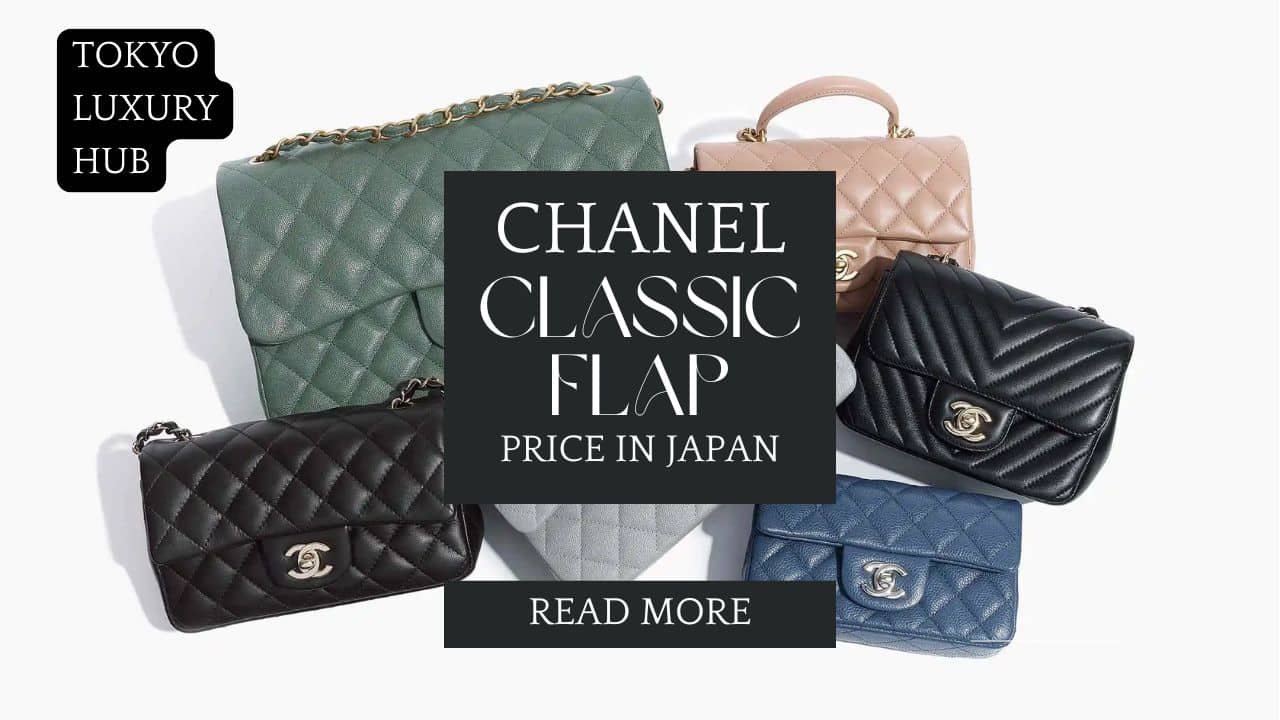
As of early 2026, the Chanel Classic Flap in medium size — the most widely referenced configuration in caviar or lambskin leather with gold-tone hardware — is priced at approximately ¥1,540,000 at Chanel boutiques in Japan. The small Classic Flap sits near ¥1,380,000, while the jumbo variant reaches approximately ¥1,700,000. These figures reflect Chanel’s most recent global price adjustment, implemented in the first quarter of the year, which saw increases of roughly five to seven percent across the Classic Flap range in the Japanese market.
It is worth noting that these boutique prices represent a meaningful differential when compared to equivalent retail pricing in Europe, the United States, and certain other Asian markets.
The yen’s position relative to the euro and the dollar has created windows of relative value for international purchasers — a dynamic that has not gone unnoticed by sophisticated buyers from Greater China, Southeast Asia, and Australasia who increasingly view Tokyo as a destination for strategic luxury acquisition.
Price Trajectory: A Decade of Compounding Increases
To contextualise the 2026 figures, one must consider the remarkable trajectory of the past decade. In 2016, the medium Classic Flap retailed in Japan for approximately ¥620,000.
The cumulative increase over ten years represents a growth rate that significantly outpaces inflation in most developed economies. Chanel’s pricing strategy — characterised by regular, deliberate increases — has been among the most aggressive in the luxury sector, and there is no indication that this approach will moderate in the near term.
Why Japan Remains a Strategic Market for Chanel Acquisition
Japan’s luxury retail infrastructure is without parallel.
The concentration of Chanel boutiques across Tokyo — from the flagship on Namiki-dōri in Ginza to locations in Omotesando, Shinjuku, and the department store concessions within Isetan, Mitsukoshi, and Takashimaya — provides a breadth of access that few cities can rival.
Equally important is the standard of service: the purchasing experience in a Tokyo boutique is characterised by an attentiveness and discretion that aligns with the expectations of the most demanding clientele.
Beyond the boutique experience, Japan’s secondary market ecosystem is the most developed and trustworthy in the world.
Specialist resellers in neighbourhoods such as Ginza, Aoyama, and Shinsaibashi in Osaka maintain inventories of authenticated pre-owned Classic Flaps in conditions ranging from pristine to gently carried, often at prices that reflect nuanced understanding of rarity, colour, leather type, and hardware generation.
For collectors seeking discontinued configurations — a specific seasonal colour, a now-retired leather finish — Japan’s secondary market is frequently the first and most reliable point of inquiry.
Craftsmanship and Heritage: The Enduring Foundation of Value
The Classic Flap’s pricing power is inseparable from the heritage of the house and the specificity of its construction. Originally conceived by Karl Lagerfeld in 1983 as an evolution of Gabrielle Chanel’s 2.55 design from 1955, the Classic Flap introduced the interlocking CC turn-lock clasp that has since become one of the most recognised symbols in global fashion.
Every unit is produced in Chanel’s ateliers in France under conditions of extraordinary quality control — a fact that the maison communicates not through overt marketing but through the object itself.
The diamond-quilted stitching, the burgundy leather interior lining, the chain-interlaced leather strap — each element reflects decisions made decades ago that have proven immune to the vagaries of trend.
This consistency is central to the Classic Flap’s identity as a vessel of enduring value. Unlike pieces subject to seasonal reinvention, the Classic Flap accrues authority through repetition and refinement rather than novelty.
Investment Value and Portfolio Considerations
The framing of luxury handbags as alternative investments has matured considerably in recent years, moving from anecdotal observation to data-supported analysis. The Chanel Classic Flap consistently ranks among the strongest performers in indices that track the resale value of luxury goods. Several factors underpin this performance:
- Predictable price escalation: Chanel’s annual and semi-annual retail price increases create a floor that supports and elevates secondary market valuations.
- Controlled supply: The maison maintains deliberate scarcity through production limitations and boutique purchase restrictions, typically limiting buyers to one or two Classic Flaps per transaction, per period.
- Universal recognition: The Classic Flap’s global brand equity ensures deep liquidity in the resale market across every major geography.
- Condition resilience: Well-maintained examples in caviar leather retain structural integrity and aesthetic appeal over decades of use, a characteristic that bolsters long-term resale prospects.
For high-net-worth individuals who allocate a portion of their holdings to tangible luxury assets, the Classic Flap represents a low-volatility position with a demonstrably positive historical return profile.
This is not to suggest it replaces conventional financial instruments, but rather that it occupies a distinctive and increasingly respected position within a diversified approach to wealth preservation.
Currency Dynamics and the International Buyer Advantage
The Japanese yen’s relative softness against major currencies through 2025 and into 2026 has amplified Tokyo’s attractiveness as a luxury purchasing destination. A buyer converting from US dollars, euros, or Singapore dollars may realise effective savings of ten to fifteen percent compared to purchasing the same item at a boutique in Paris, New York, or Hong Kong — before considering Japan’s tax-free shopping provisions for international visitors, which further enhance the value proposition.
This arbitrage is not lost on the market.
Tokyo’s Chanel boutiques have reported sustained international demand, and certain popular configurations — particularly the medium Classic Flap in black caviar with gold hardware — experience periodic availability constraints. Prospective buyers are advised to engage with boutiques in advance, and in some cases, to work through established personal shopping channels that facilitate access and streamline the acquisition process.
Consumer Behaviour and Shifting Demographics
The profile of the Classic Flap buyer in Japan is evolving. While the domestic Japanese consumer remains a foundational pillar — particularly women in their thirties through fifties who view the piece as both a personal milestone and a functional luxury — the market has expanded to include younger collectors driven by investment awareness, male buyers acquiring pieces as gifts or as components of curated collections, and international visitors for whom a Tokyo purchase carries both financial and experiential significance.
Social media has played a nuanced role.
Rather than diminishing the Classic Flap’s exclusivity, digital visibility has reinforced its aspirational status while simultaneously educating a broader audience about pricing trends, authentication standards, and the importance of provenance — all factors that ultimately strengthen the piece’s secondary market ecosystem.
The Secondary Market in Tokyo: Depth, Trust, and Opportunity
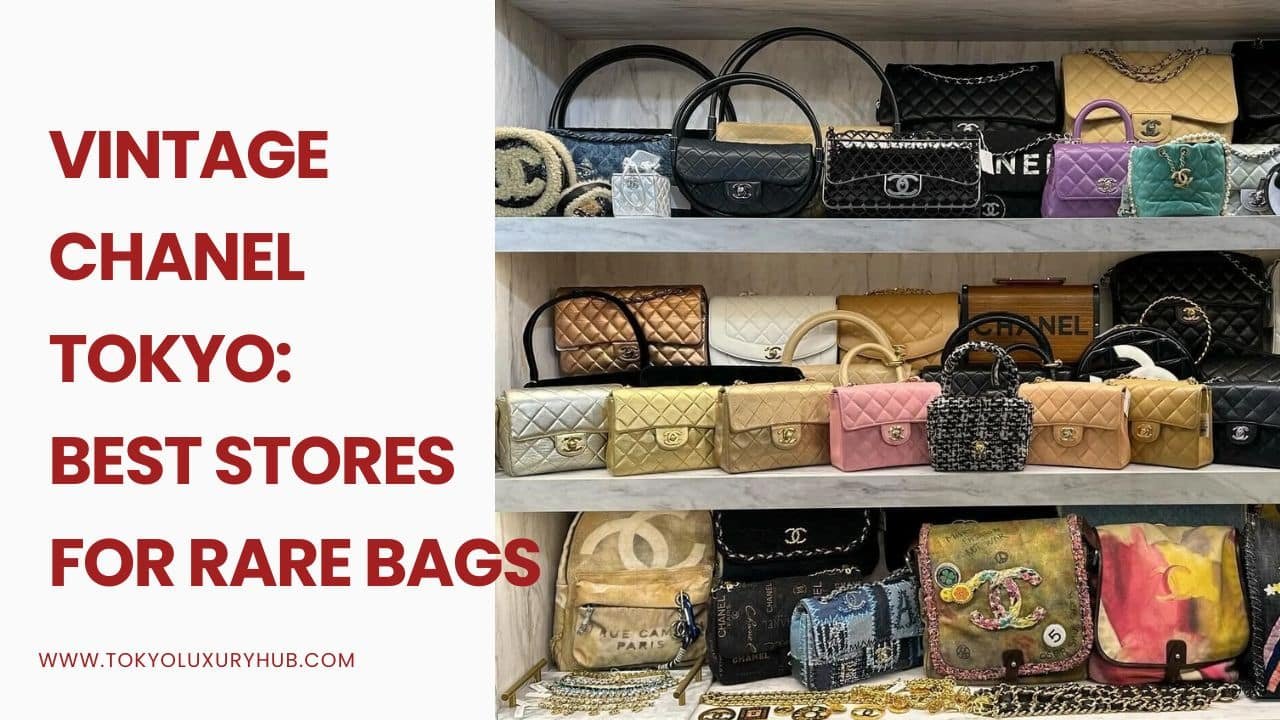
Japan’s pre-owned luxury market operates at a level of institutional rigour that distinguishes it from virtually every other geography. Specialist dealers employ in-house authentication teams, maintain climate-controlled storage, and grade inventory according to standardised condition scales. For collectors seeking vintage or limited-edition Classic Flaps — a particular shade from a past seasonal collection, a rare exotic leather execution, or an early-production example with specific interior stamping — Tokyo’s secondary market offers unmatched depth.
Pricing in this segment varies considerably based on condition, rarity, and provenance. A pre-owned medium Classic Flap in excellent condition may trade at or slightly above the current retail price, while rarer configurations can command significant premiums. The transparency and professionalism of Japan’s resale infrastructure provide confidence for both domestic and international buyers navigating this market.
Key Considerations for Prospective Buyers in 2026
For those evaluating a Classic Flap acquisition in Japan this year, several factors merit careful consideration:
- Timing relative to price adjustments: Chanel typically implements increases in spring and autumn. Purchasing ahead of an anticipated adjustment preserves value at the point of entry.
- Leather and hardware selection: Caviar leather offers superior durability and tends to perform more strongly in the resale market; lambskin, while exquisite to the touch, requires more attentive care.
- Documentation and provenance: Retaining the original box, dust bag, authenticity card, and receipt is essential for maximising long-term resale value.
- Boutique relationship: Cultivating a rapport with a dedicated sales associate at a preferred boutique enhances access to sought-after inventory and facilitates a more personalised experience.
A Forward Perspective on Chanel Pricing in Japan
Chanel has signalled no departure from its pricing philosophy. The maison’s leadership has consistently framed price increases as a reflection of rising material costs, artisanal labour, and a deliberate strategy to position the brand at the apex of the luxury hierarchy. Analysts anticipate further increases through the balance of 2026 and into 2027, suggesting that the current moment — while already elevated by historical standards — may represent relative value when viewed retrospectively.
Japan’s structural advantages as a luxury market — its authentication standards, its retail infrastructure, its currency position, and its cultural reverence for quality — reinforce Tokyo’s standing as a destination of first choice for informed buyers worldwide.
Conclusion
Understanding the Chanel Classic Flap price in Japan (2026 Guide) requires more than a glance at a price tag. It demands an appreciation of the forces — economic, cultural, and artisanal — that converge to make this object one of the most compelling propositions in the global luxury market.
Tokyo, with its unparalleled ecosystem of boutiques, specialist resellers, and discerning clientele, offers the ideal environment in which to make such an acquisition with confidence and clarity.
For those who approach luxury with intention, the Classic Flap remains not merely a purchase, but a considered position — one that has rewarded those with the patience and knowledge to hold it well.